FREQUENTLY ASKED QUESTIONS
Does my child sit at the piano straight away?
Yes. At Stringnote, we start making music from the very first lesson. We introduce musical elements as and when they are needed, keeping the learning process natural, engaging, and relevant to your child's progress.
Do you use conventional notation?
Yes. While we use animal names to introduce notes and rhythmic figures, we teach traditional notation from the outset. We use only one sticker to mark Middle C; we avoid placing stickers on other keys so your child feels comfortable and confident playing on any piano, not just their own.
Can my child continue learning piano with another teacher if we need to relocate?
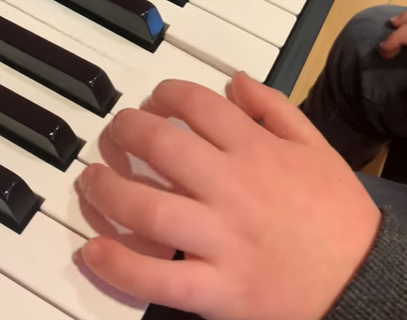
Yes. Your child is not confined to our method. Our approach is built upon standard notation, ensuring that if you move to a new city or country, your future teacher will be pleased to find that your child reads music fluently and has developed a proper, healthy hand position.
Can my child do grades in the future?
Yes. Our five "Minigrades" are a pathway toward grade examinations, not an alternative to them. The aim of these steps is to prepare your child for grades smoothly, ensuring they acquire a solid foundation in rhythm, hand position, note reading, and musicality.
What if my child, upon finishing Minigrade 5, doesn’t want to follow the ABRSM programme?
We offer our own alternative: the "Fulhamtree Grades". These follow the style of our Minigrades, using music with a cinematic quality rather than strictly classical repertoire, while still utilizing technical skills imported from classical traditions. This ensures that if your child’s interest in classical music grows, they will feel perfectly comfortable playing classical. While we also incorporate elements of popular music, we avoid the mistake of using *only* pop tunes, which can hinder the development of the nuanced techniques required for classical piano. Our Fulhamtree grades are compatible with ABRSM and Trinity, allowing students to switch between them easily.
What are the ABRSM piano examinations?
- ABRSM (Associated Board of the Royal Schools of Music) exams are the gold standard for musical assessment in the UK. They provide a structured, internationally recognized way to measure your child’s musical progress, covering performance, technique, and listening skills. ABRSM is a board we work with because it offers a comprehensive, steady path that builds real confidence and helps students achieve their goals.
- We also work with Trinity College London, which is another highly respected board often favored for its creative, performance-led focus.
Do I need a piano at home?
Yes. Your child will soon be given homework, so having a piano at home is very important. Don’t worry—there are many options available. Check out our recommended piano list to see what is most convenient for you.
Can my child learn piano online?
Yes. There will come a point when your child can transition to online lessons if circumstances demand it. This depends on each individual case and the level your child has reached.
Is my child assigned a fixed teacher?
If your lessons are at home, you will have a fixed teacher. At our sites, however, we use a rotation system: children typically have two lessons with one teacher, and then another teacher takes over for the next two weeks and so on. This is a key part of our teaching dynamics. All our teachers are trained in the same method, ensuring consistency. At the same time, this rotation provides "nutritional variety"—each teacher brings a fresh perspective and new energy to the lesson, helping students adapt and grow.